Showing posts with label Memoir. Show all posts

Friday, 25 February 2022

Notes from the Holocaust

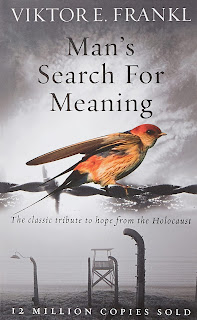
Viktor Frankl (2008), Man’s search for meaning, Rider, London, pp. 154

I read this classic book and ended the last year on a thoughtful note. As December sets in, something tugs me to ponder over the year gone by and my reading list reflects the search for meaning and purpose and a propensity for introspection and reflection. I had saved up this book for the last and as the winter gently rolled in, I was with this exceptional individual, who when faced with unspeakable experiences of adversity, oriented himself towards life and humanity. As I read through Viktor Frankl’s notes from concentration camps during the second world war, there were two people narrating the story. The first was the professor of neurology and psychiatry who spoke with lucid objectivity and dispassionate clarity on what made the survivors last in the midst of horror and incertitude. The second was the individual who reminisced about the life he lost and thought about the life that awaited him with hope and longing. The extraordinary scholar and the ordinary person and the contradiction of the nature and tone of the arguments are some of the things that makes this work a compelling read.

The book is divided into three parts – the experiences at the concentration camp, the introduction to a school of psychotherapy based on these experiences and a post script. The first part reads like a memoir, the second an exposition, and third a thoughtful reflection that asks a few questions.

We live at a time when history is actively being forgotten or misconstrued and the assault on truth and memory is gaining traction as this The New York Times review of books Erasing the Holocaust trenchantly argues.  It is important to lean on memoirs and other forms of historical records to remind ourselves what we have been through and educate ourselves about the consequences of erasure. Beyond the inspiring cadence of the triumph of the human spirit, that is what this book serves to remind us.  

Wednesday, 10 June 2020

Mind Master


Viswanathan Anand (2019), Mind Master: Winning Lessons from a Champion’s Life, Hachette India, Gurugram, pp. 262

I love reading sports champion’s memoirs. It is a great way to know how the big game looked through the eyes of the player, all the ups and downs as we knew it as purveyors of the game against how it felt living through it. It is something like a gladiator telling you how wrestling with the lion felt like. For me it works like this. First, there is a quick tallying of the big moments in my head against their impressions, and the vicarious pleasure of living through it again. What remains when you have finished reading is the opportunity to take something useful out of their lives into your own. Two of my all-time favorite books from sports champions are Pete Sampras’ ‘A Champion’s Mind: Lessons from a Life in Tennis’ and Garry Kasparov’s ‘How Life Imitates Chess’.

India’s First Grand Master

You can imagine how I felt dipping into the memoir of India’s first Grand Master in Chess and former World Champion Viswanathan Anand when I was waiting for the pandemic to subside and life to start over. The book gives you everything that you are hoping for, especially if you are a chess aficionado. It also gives a bit more- each chapter ends with a classic move on a chess board from the greatest games Anand ever played, with a nugget of wisdom to go with it.

Anand takes you through the big breaks in his chess career and gives a peek into his chess story -the beginning, the first win, the first foreign tour, being Grand Master and World Champion. We also get a gentle foray into his life story – with two sets of parental figures across two continents, meeting his wife, making friends (and enemies) and the birth of his son. He vividly describes the theatrics that goes into dueling it out at the board, the politics behind the scenes, and the advent of artificial intelligence that changed the way chess is played. Anand is fierce at his game and gentle as a person, and this contradiction resonates in the way he narrates his story with its soft sways and edgy turns! We feel nervous and anxious with him as he describes going into a game, and are forlorn as he deals with the loneliness of his failures and successes.

Personal Insights

The best part of the book for me was the personal insights. Anand keeps notes of every game obsessively, an old practice instilled in him by his mother. There is always the clarity you expect from a man who writes down his thoughts and the deliberate privileging of one fact over another, one facet above the rest. For example, whilst talking about fortifying his game, Anand brings us to the ideas of serendipity and limitless learning. He talks about how important it is to be curious about the things you do not know, and learning a wide range of things that are of no immediate relevance. He says it naturally as part of the narrative and yet you stop and take note of it.

In many ways, Anand is an unusual champion. He plays in the top league of the game at the age of fifty! That fact speaks of the way his mind works, sharp and steady, patient and resilient. That is one among the many reasons to read this book.